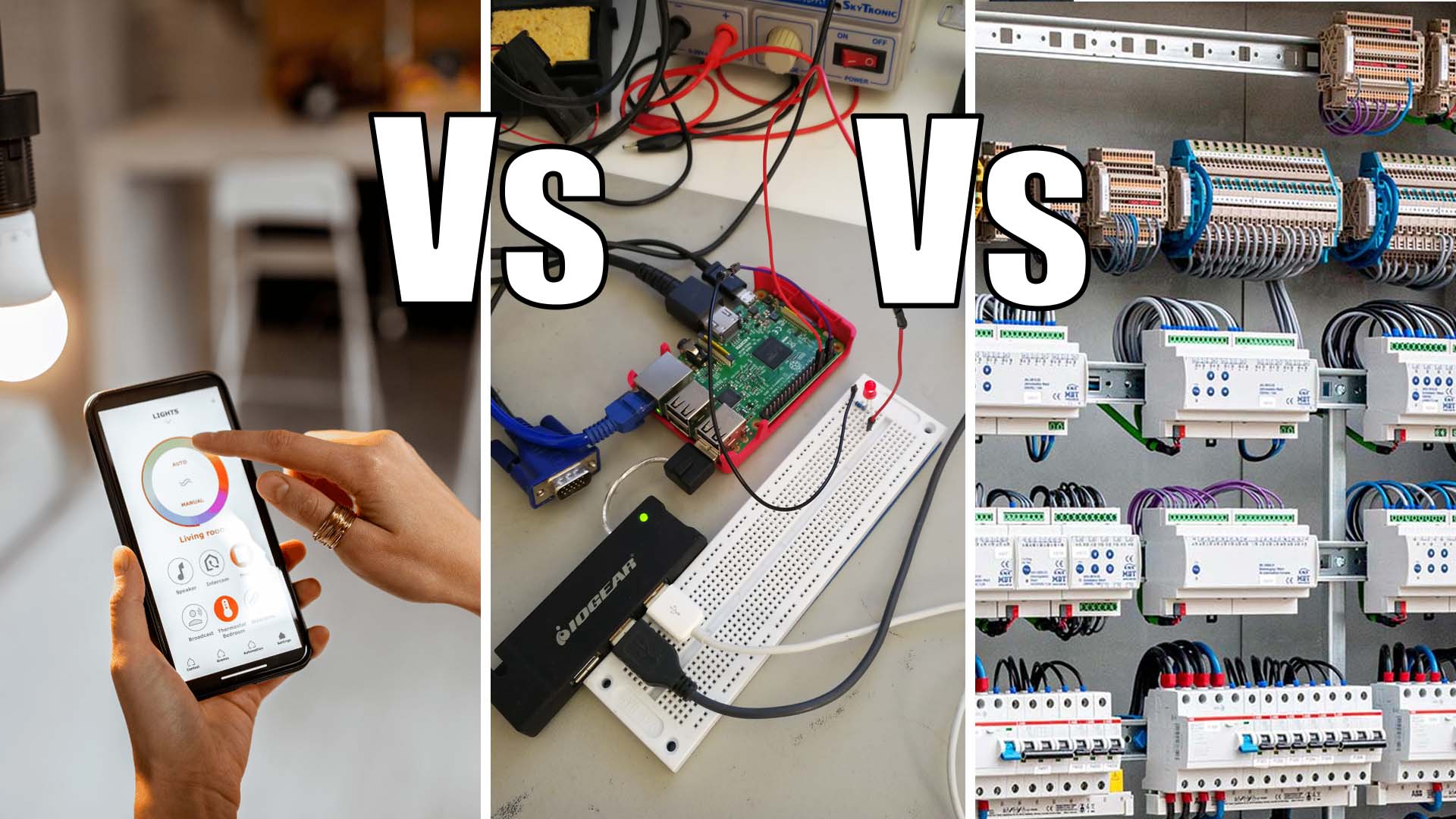
Cloud vs Local vs Wired Smart Home Systems (Beginner Guide)
If you’re researching smart home systems, you’ve probably come across three common terms:
- Cloud-based
- Local control
- Wired smart home
They all describe different ways your home devices communicate and automate. Understanding the difference early on will help you choose the right setup — especially if you plan to expand beyond a few smart bulbs.
In this beginner guide, we’ll compare:
- Cloud smart home systems
- Local smart home systems
- Fully wired smart home systems
- The pros and cons of each
- Which option makes sense for different situations
What Is a Cloud-Based Smart Home?
A cloud-based smart home relies on external servers to process commands and automations. When you turn on a smart light or trigger an automation, the command typically travels from your device, out to the internet, gets processed by the manufacturer’s servers, and then returns to your home.
This is how most mainstream systems work, including platforms like Amazon Alexa and Google Home, as well as many Wi-Fi smart plugs and bulbs.
Cloud systems are popular because they are extremely easy to set up. You plug in the device, connect it to Wi-Fi, download an app, and you’re up and running. There’s very little technical knowledge required, which makes them ideal for beginners.
However, cloud-based systems depend on your internet connection. If your internet goes down, some or all of your smart home functionality may stop working. Response times can also be slightly slower because every command travels outside your home network.
What Is a Local Smart Home System?
A local smart home system processes automations inside your home rather than in the cloud. Instead of sending commands to external servers, devices communicate with a local hub or small computer on your network.
When you press a switch or trigger a motion sensor, the command stays within your home. This usually results in faster response times and improved reliability.
Platforms such as Home Assistant and Hubitat are commonly used for local control. These often run on hardware like a Raspberry Pi, mini PC, or dedicated hub device.
Local systems are typically more powerful than cloud-only setups. They allow more advanced automation logic and greater flexibility. The trade-off is that they require more setup and ongoing management. For hobbyists and tech-minded users, this is often part of the appeal.
What Is a Wired Smart Home System?
A wired smart home system takes things a step further. Instead of relying primarily on Wi-Fi or wireless communication, switches, sensors, and lighting circuits are physically wired back to a central control panel.
Examples of wired systems include Loxone, Control4, and higher-end Lutron systems such as HomeWorks.
These systems are most commonly installed during new builds or major renovations, because they require structured wiring. Instead of installing smart bulbs throughout the house, lighting circuits are controlled centrally via relays. Wall switches are often low-voltage inputs connected directly to the control system.
Because communication is wired, response times are effectively instant. Reliability is extremely high, and the system is less affected by wireless interference or network issues.
The downside is cost and complexity. Wired smart home systems are significantly more expensive upfront and often require professional installation. Retrofitting an existing property can also be challenging.
Reliability and Performance Comparison
In terms of reliability, the progression generally looks like this:
Cloud → Local → Wired
Cloud systems rely on your internet connection and third-party servers. If either fails, functionality can be reduced.
Local systems remove internet dependency for most automations. As long as your home network is running, your automations continue working.
Wired systems reduce reliance on wireless communication altogether. They offer the highest level of stability and are commonly used in high-end residential and commercial installations.
If your internet connection drops:
- Cloud systems may lose functionality
- Local systems usually continue operating
- Wired systems remain unaffected
Cost Differences
The cost difference between these approaches is significant.
A basic cloud smart home setup can cost very little to get started. A few Wi-Fi devices and a voice assistant may only require a modest budget.
Local systems require some hardware investment, such as a hub or small server, but remain accessible for most enthusiasts.
Wired smart home systems are a long-term investment. They are often planned as part of the overall building project and can cost several thousand pounds depending on scale.
The higher cost reflects increased reliability, integration, and long-term scalability.
Which Smart Home System Should Beginners Choose?
For beginners, the right choice depends on goals.
If you rent, want minimal setup, and only plan to automate a few devices, a cloud-based system is the simplest entry point.
If you enjoy technology and want more advanced automations with improved reliability, a local smart home system offers significantly more flexibility.
If you are building or renovating and want a fully integrated solution designed to last for years, a wired smart home system operates in a different category entirely.
Many homeowners eventually adopt a hybrid approach. For example, a wired lighting core may handle core infrastructure, a local hub may manage advanced automations, and cloud services may provide voice control. This layered model can combine reliability with convenience.
Common Beginner Mistakes
One of the most common mistakes is buying devices without considering long-term compatibility. Mixing too many ecosystems can create unnecessary complexity.
Another mistake is not thinking ahead. Smart home systems are much easier to expand when the core architecture is chosen carefully at the beginning.
Finally, many people underestimate the importance of reliability. A smart home that only works when the internet is perfect can quickly become frustrating.
Final Thoughts
Cloud, local, and wired smart home systems are not simply different brands — they represent fundamentally different approaches to automation.
Cloud systems prioritise convenience.
Local systems prioritise control and flexibility.
Wired systems prioritise reliability and long-term integration.
Understanding these differences makes it much easier to choose the right starting point and avoid rebuilding your setup later.