Master Your Camera: 5 Essential Photography Composition Tips for Breathtaking Photos
Ever wondered why some photos just pop, while others fall flat, even with the same subject? The secret often lies not in expensive gear, but in understanding a few fundamental photography composition tips. Good composition transforms an ordinary snapshot into a captivating image, guiding the viewer’s eye and telling a compelling story. It’s about how you arrange the elements within your frame, and mastering these principles is one of the quickest ways to elevate your photography from amateur to awe-inspiring.
Why Composition Matters More Than Gear
Think of composition as the blueprint of your photograph. Just as a well-designed house is both functional and beautiful, a well-composed photo is both clear in its message and aesthetically pleasing. Your camera body and lenses are tools, but it’s your artistic eye, honed by understanding composition, that truly creates magic. Even the most basic camera can produce stunning results when armed with solid photo rules for arrangement. It allows you to create depth, balance, and a sense of harmony that draws people into your visual narrative.
The Core 5 Photography Composition Tips You Need to Know
These aren’t rigid laws, but powerful guidelines that, once understood, you can apply or even intentionally break for creative effect. They are the bedrock of impactful visual storytelling.
1. Embrace the Rule of Thirds
This is perhaps the most well-known and universally effective photography composition tip. Imagine dividing your image into nine equal segments by two equally spaced horizontal lines and two equally spaced vertical lines (many cameras even have a grid overlay for this). Instead of centering your subject, place it along these lines or, even better, at their intersections. This creates more dynamic and engaging images than simply placing everything dead center. It adds tension and interest, making the viewer explore the frame rather than just glance at the middle.
2. Harness the Power of Leading Lines
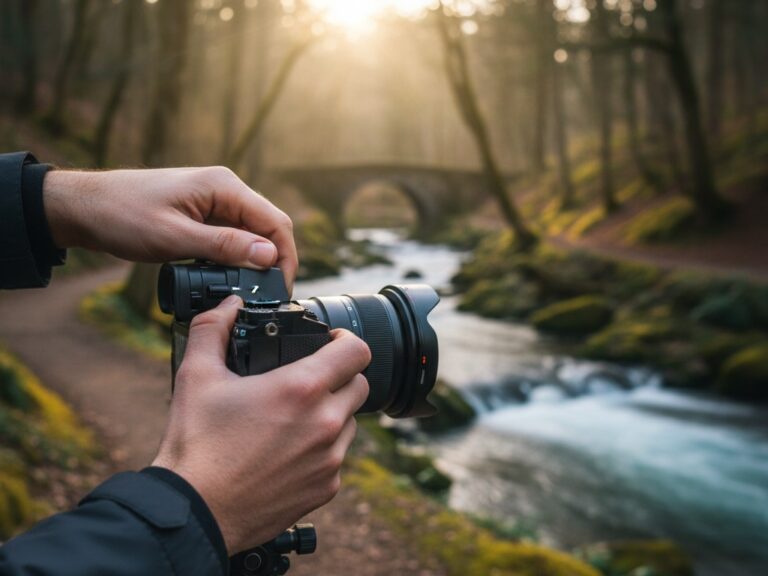
Leading lines photography is about using natural or artificial lines within your scene to draw the viewer’s eye towards your main subject or through the image itself. Think about roads winding into the distance, a fence leading to a barn, or even the natural curves of a river. These lines create depth, direction, and a visual pathway, making your photograph feel more immersive and dynamic. Look for strong diagonals, S-curves, or converging lines to add incredible impact to your shots.
3. Simplify with Negative Space
Often overlooked, negative space is simply the empty area around and between the subject(s) of an image. It’s not just ‘nothing’; it’s a crucial compositional element that gives your subject room to breathe and stand out. By intentionally including uncluttered areas, you can create a sense of minimalism, emphasize your subject, and even evoke emotion. Don’t be afraid to let large parts of your frame be “empty” if it serves to highlight what truly matters.
4. Frame Your Subject Naturally
Natural framing involves using elements within your scene to create a “frame” around your main subject. This could be tree branches, a doorway, a window, or even shadows. A natural frame helps to isolate your subject, draw attention to it, and add depth and context to your photograph. It’s an excellent way to add visual interest and direct the viewer’s gaze without complicated post-processing.
5. Understand Symmetry & Patterns
Symmetry is all about balance, where one side of the image mirrors the other, either perfectly or approximately. Reflections in water, architectural facades, or even a person’s face can offer stunning symmetrical compositions. Patterns involve repetition of elements, shapes, or colors, which can create rhythm and visual harmony. While symmetry can be incredibly striking, knowing when to break it – by introducing an asymmetrical element into an otherwise symmetrical scene – can add intrigue and a focal point that captures attention.
Putting Photography Composition Tips into Practice
Learning these photography composition tips is just the first step. The real magic happens when you actively start looking for these elements through your viewfinder. Don’t just point and shoot; pause, observe your surroundings, and think about how you can arrange the elements to create the most impactful photograph. Experiment with different angles and perspectives. The more you practice, the more intuitive these “photo rules” will become.
Ready to transform your snapshots into works of art? Grab your camera, head out, and deliberately apply one or two of these composition techniques to your next shooting session. You’ll be amazed at the difference it makes!